Saving
Medicare vs Medicaid: What Is the Difference?
Medicare and Medicaid sound similar but serve different populations with different rules. Here is exactly who each covers and how they interact.
Last updated September 4, 2026
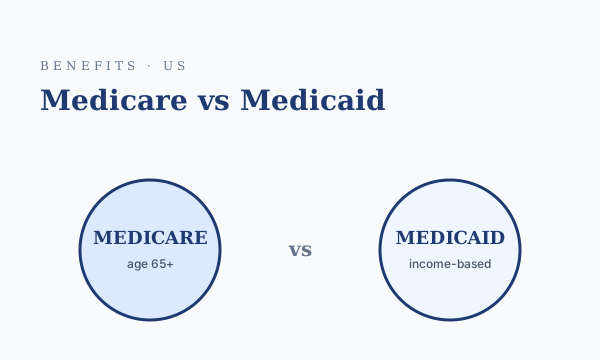
Medicare and Medicaid are two of the most confused US government programs. The names sound similar, both provide health coverage, and some people qualify for both. But they serve fundamentally different populations under fundamentally different rules. Understanding the distinction is essential for anyone approaching retirement, dealing with disability, planning for long-term care, or supporting aging parents.
This guide covers who each program serves, what each covers, how they interact for people who qualify for both (dual eligibility), and the critical long-term care planning implications that surprise most families. All specifics come from the Centers for Medicare & Medicaid Services (CMS) and state Medicaid agencies — verify current rules for your state before making planning decisions.
Medicare basics
Medicare is federal health insurance primarily for Americans aged 65 and older, along with certain younger people with disabilities (after 24 months of Social Security Disability Insurance) or end-stage renal disease. Eligibility is not income-based — a millionaire and a low-income retiree qualify identically at 65. The program is funded through Medicare taxes paid throughout working life (2.9% split between employer and employee, plus additional Medicare tax on high earners).
Medicare has four parts: Part A (hospital, typically no premium), Part B (outpatient, $174.70/month standard 2024 premium), Part C (Medicare Advantage private plans), and Part D (prescription drug). Even with all parts, Medicare has deductibles, coinsurance, and no out-of-pocket maximum in Original Medicare. Most beneficiaries add either Medigap supplemental insurance or Medicare Advantage to cap exposure.
Medicare is administered federally with consistent rules nationwide. Coverage is essentially uniform whether you live in California or Kentucky. Provider networks vary by plan choice (Medicare Advantage) but Original Medicare is accepted by most providers nationally.
Medicaid basics
Medicaid is joint federal-state health insurance for low-income individuals and families. Eligibility is income and asset-based — you must meet financial criteria set by your state within federal guidelines. Medicaid is the largest health insurance program in the US by enrollment, covering approximately 87 million people (2024) including children, pregnant women, elderly nursing home residents, and low-income adults.
Unlike Medicare, Medicaid varies significantly by state. States set eligibility income limits (typically 133-138% of federal poverty level for adults under ACA expansion, up to 200%+ for children), covered benefits, provider networks, and specific programs. Some states offer more generous benefits than the federal minimum; others provide only mandatory coverage.
Medicaid enrollment happens through state Medicaid agencies (often through Healthcare.gov initial application, then routed to state). Coverage typically has zero or minimal premiums, low copays, and no deductibles for most services. Coverage is comprehensive when providers participate — but Medicaid provider participation is often lower than Medicare or private insurance due to reimbursement rate concerns.
Who qualifies for what
Medicare eligibility: age 65+ regardless of income; OR receiving Social Security Disability Insurance for 24+ months; OR diagnosed with end-stage renal disease requiring dialysis; OR diagnosed with ALS (starting immediately). Enrollment happens automatically for most people already receiving Social Security; others must actively enroll during their Initial Enrollment Period.
Medicaid eligibility: income below state limits (varies from ~$1,600/month for individuals in non-expansion states to ~$1,800/month in expansion states); AND asset limits (often under $2,000 in countable assets for elderly Medicaid recipients, with primary home and vehicle usually exempt); AND meet categorical requirements (age, disability, family with children, etc. in states that did not expand).
The interaction: Many Medicaid rules become more permissive at 65. States often use higher income limits for elderly Medicaid recipients (Aged, Blind, Disabled or ABD Medicaid) than for regular adult Medicaid. Someone 66 with low income and limited assets may qualify for Medicaid despite exceeding standard adult limits.
Dual eligibility (having both)
People who qualify for both Medicare and Medicaid are called "dual eligibles" or "duals." Approximately 12 million Americans have both. For duals, Medicare is primary payer (pays first) and Medicaid is secondary (pays what Medicare does not cover, including Medicare premiums, deductibles, copays, and Medicare-excluded services).
Benefits of dual eligibility: Medicare Part B premium paid by Medicaid (saving $174.70/month standard), no deductibles or copays on covered services, Medicare-excluded services covered (dental, vision, long-term care), automatic enrollment in Extra Help program for Part D drug costs, coordinated care through Dual Eligible Special Needs Plans (D-SNPs) if desired.
Enrollment for duals: apply for Medicare through Social Security at 65, apply for Medicaid through your state agency, verify dual eligibility with both programs. Some states have specific enrollment coordinators for dual eligibles. Coverage typically activates within 1-3 months of application approval.
The long-term care question
This is where the distinction between Medicare and Medicaid becomes catastrophic for many families. Medicare covers up to 100 days of skilled nursing facility care AFTER a qualifying hospitalization — designed for post-surgical recovery, not long-term care. After day 100, Medicare pays nothing for nursing home care.
Medicaid is the largest payer of long-term nursing home care in the US, covering approximately 60% of nursing home residents. But qualifying for long-term care Medicaid requires meeting strict income and asset limits: typically under $2,000 in countable assets for individuals, with income limits varying by state. Home and vehicle are often exempt but with equity caps.
Nursing home costs average $8,000-12,000/month depending on region. Middle-class families often "spend down" savings paying for care before qualifying for Medicaid. Married couples have special protections (Community Spouse Resource Allowance) preventing complete impoverishment of the healthy spouse. But without advance planning, decades of saving can be depleted in 2-4 years of nursing home care.
Medicaid look-back and estate recovery
Medicaid has a 5-year "look-back period" for transferring assets. Any assets given away, sold below market value, or transferred to trusts within 5 years of Medicaid application create a penalty period during which you are ineligible for Medicaid despite otherwise qualifying. The penalty period equals the transferred amount divided by the state's average monthly nursing home cost.
Medicaid estate recovery: after death, states are required by federal law to recover Medicaid costs from the recipient's estate. This typically means claims against the primary home (which was exempt during life). Heirs may face forced sale of the family home to repay Medicaid. Some states are more aggressive than others; some limit recovery to probate assets only.
Advanced planning options: Medicaid Asset Protection Trusts (irrevocable trusts holding assets outside the 5-year look-back), long-term care insurance (private coverage that preserves Medicaid ineligibility longer), spending down assets on exempt items (home improvements, pre-paid funeral, vehicle for adult child caretaker). These strategies require Medicaid-planning attorney involvement — DIY approaches frequently fail due to complex rules.
Common Medicare/Medicaid mistakes
The most common mistake is assuming Medicare covers long-term care. Adult children discover in crisis that Mom's Medicare will pay for 20 days after her stroke but nothing after — and long-term nursing care immediately depletes savings. Plan for long-term care separately (insurance, savings, family support) — do not rely on Medicare.
The second common mistake is transferring assets shortly before applying for Medicaid to "hide" them. The 5-year look-back catches these transfers and creates penalty periods that leave you ineligible during the exact period you need care. Legitimate Medicaid planning requires 5+ years of lead time; last-minute attempts typically fail.
The third mistake is not applying for dual eligibility when qualified. Many people who qualify for both never apply for Medicaid, leaving Medicare premium and cost-sharing money on the table. If income is low, check dual eligibility status with your state Medicaid agency — the paperwork takes hours; the savings can be thousands annually.
Sources and methodology
We use primary and authoritative sources for rules, definitions, and data. Sources and factual claims were last checked September 4, 2026.
- Retirement benefits — U.S. Social Security Administration (United States)
- Budgeting resources — Consumer Financial Protection Bureau (United States)
- Financial education — OECD (Global)
Frequently asked questions
- What is the main difference between Medicare and Medicaid?
- Medicare is age-based (65+) or disability-based federal health insurance available to those who paid Medicare taxes. Medicaid is income-based joint federal-state health insurance available to low-income individuals and families regardless of age. Some people qualify for both — called dual eligibility.
- Can I have both Medicare and Medicaid?
- Yes. Dual-eligible individuals typically have Medicare as primary coverage and Medicaid covering premiums, deductibles, copays, and services Medicare does not (long-term care, dental, vision). Dual eligibility significantly reduces out-of-pocket costs. Enrollment happens through both Social Security (Medicare) and state Medicaid agencies.
- Does Medicaid cover nursing home care?
- Yes, Medicaid is the largest payer of long-term nursing home care in the US. Medicare only covers up to 100 days of skilled nursing after hospitalization and does not cover long-term custodial care. Medicaid requires meeting strict income and asset limits (varies by state; often under $2,000 in assets). Advance planning is essential — improper transfers can trigger 5-year lookback penalties.
Related articles
Medicare Basics: Parts A, B, C, and D Explained
Medicare has four parts with different rules and costs. Here is what each covers, when to enroll, and how to avoid the lifetime late-enrollment penalties.

Estate Planning Basics: Wills, Trusts, and Beneficiaries
Estate planning is not just for the wealthy — every adult with assets or dependents needs core documents in place. Here are the four that matter most.
How Much Emergency Fund Do You Really Need?
The standard "three to six months of expenses" is a starting point, not a rule. Here is how to size your emergency fund based on your real situation.