Budgeting
The Cash Envelope System: An Old Method That Still Works
The envelope system is a decades-old budgeting method that keeps working for one reason: the physical friction of handling cash slows down spending in ways an app cannot.
Last updated September 3, 2026
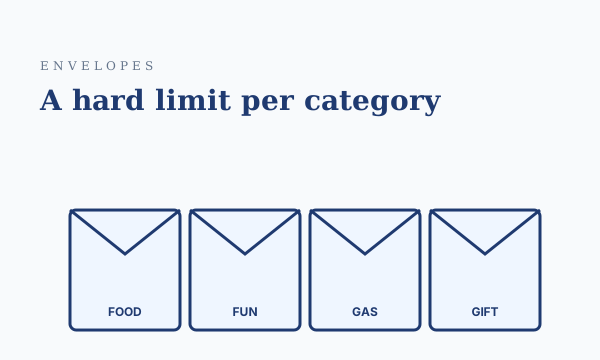
The cash envelope system is a budgeting method popularised long before apps existed. The core idea is simple: divide cash by category into labelled envelopes at the start of each pay period. When an envelope is empty, you stop spending in that category until next period. When it is full, you have flexibility.
The method survives because the physical act of handing over cash creates friction that a swipe or tap does not. Behavioural research consistently finds that people spend less when they use cash than when they use cards for the same purchases.
How the classic method works
Step one: identify the variable spending categories most prone to overspending in your life. Common examples: groceries, dining out, entertainment, personal spending, gifts. Step two: at each pay period, withdraw cash for these categories and put the exact amount into a labelled envelope for each. Step three: spend only from the envelope for that category, and stop when it is empty.
Fixed bills (rent, utilities, insurance, subscriptions) stay on autopay from chequing. The envelopes only cover variable categories where you have day-to-day discretion.
Why physical cash works
Three effects. First, cash makes spending visible in a way cards do not - you can see the envelope emptying. Second, running out of cash for a category is a hard stop, without the option of "just this once" that a card silently allows. Third, handling physical bills triggers a small emotional response most people do not feel when tapping a card, which naturally slows down impulse purchases.
When cash envelopes are the right fit
The method works best for people who consistently overspend in specific categories and cannot rein in the behaviour through digital tracking alone. It is particularly effective for recovering from credit-card debt, for households with two spenders who need clear category limits, and for anyone whose spending gets loose specifically because tapping a card feels weightless.
A modern digital version
If handling physical cash is impractical, a close digital equivalent uses separate accounts or "buckets" in an online bank. Send a fixed amount to each category account at the start of the pay period, and set your debit card to draw from the specific account for each purchase. Some banks support multiple named sub-accounts inside one chequing account for exactly this purpose. Prepaid debit cards funded once per pay period achieve a similar effect.
Common pitfalls
Two mistakes are common. First, categories that are too broad ("Everything else") defeat the purpose - the discipline comes from meaningful category boundaries. Second, borrowing between envelopes without a rule undermines the system - if you always dip into groceries for restaurant meals, you have no budget. Set an explicit rule (for example, allowed once per month) and stick to it.
Use envelopes only where a hard boundary helps
Keep fixed bills and automated goals outside the variable-spending envelopes. Choose a small number of categories that repeatedly drift—food away from home, entertainment, personal spending, or household extras—and fund them after essentials. Too many envelopes turn every purchase into bookkeeping and obscure the decisions that matter.
Set the amount from recent actual spending and the wider plan, not an aspirational cut that cannot last. Decide in advance whether unused money rolls over, moves to a goal, or resets, and whether borrowing between categories is allowed. If it is, record the transfer; otherwise every envelope quietly becomes one pool again.
Design a safe digital or cash implementation
Physical cash creates visible friction but can be lost, stolen, or unusable online. Carry only the current period’s amount and store the rest safely. A digital version can use app categories, sub-accounts, or separate prepaid balances, but confirm fees, protection, refunds, and how card authorisations affect the available amount.
Reconcile at a fixed interval and investigate differences. The method is working when it changes decisions before money leaves, not when receipts are sorted afterward. If cash handling creates risk or accessibility problems, preserve the category boundary in a safer tool rather than treating paper envelopes as the principle itself.
The behavioural science behind why envelopes work
The envelope budgeting method is essentially a controlled experiment in behavioural economics. When you allocate cash to physical envelopes labeled by spending category, you create what behavioural economists call "mental accounting" — the psychological practice of treating money as non-fungible based on its designated purpose. Money in the "groceries" envelope feels different from money in the "entertainment" envelope, even though both are the same currency. This friction slows impulsive spending decisions in a way that pure digital budgets cannot replicate.
Research consistently shows that people spend less when paying with cash than with credit cards. A 2001 MIT study found that consumers were willing to pay up to 100% more for items when using credit cards versus cash. The physical act of handing over cash triggers a small pain response that swiping a card does not. Envelope budgeting weaponises this effect — every purchase requires physically removing cash from an envelope, creating a moment of reflection that debit or credit spending skips.
Setting up envelopes: which categories deserve their own
Not every expense category benefits from an envelope. Fixed bills paid electronically (rent, utilities, insurance, subscriptions) do not need envelopes — you cannot spend the money impulsively because it goes directly to the vendor. Envelopes work best for variable discretionary categories where impulse and lifestyle inflation are real risks: groceries, dining out, entertainment, personal care, gifts, and household miscellaneous.
Start with 4-6 envelope categories. More than 8-10 creates management complexity that leads to abandonment; fewer than 3-4 defeats the purpose of category-based spending discipline. Common starter categories: groceries, dining out, personal spending, entertainment. Add categories as needed based on where your spending consistently drifts — if you have no gift-giving problems, do not create a gifts envelope; if impulse shopping is your weakness, create a specific envelope for that.
Set envelope amounts based on realistic previous spending, not aspirational goals. Reviewing 2-3 months of bank/credit card statements shows what you actually spend in each category. Cut modestly (10-20%) from that baseline; drastic cuts guarantee failure. Adjust after 3 months of actual usage — the first month always reveals miscategorised expenses and unrealistic estimates.
Physical envelopes vs digital alternatives
Traditional envelope budgeting uses physical cash in physical envelopes. This produces the strongest behavioural effect but has practical drawbacks: cash carries theft/loss risk, most modern transactions happen online where cash cannot be used, ATM withdrawals may incur fees, and reconciling exact cash flows requires diligent record-keeping.
Digital envelope apps (YNAB, GoodBudget, Qube Money) replicate the psychological effect using virtual envelopes tied to bank accounts or prepaid cards. These preserve category discipline while allowing electronic transactions. Some apps use dedicated debit cards linked to specific envelopes — Qube Money in particular requires you to "activate" money from an envelope before you can swipe. The friction is reduced compared to physical cash but preserved compared to pure spreadsheet budgeting.
Hybrid approaches work well for many households. Fixed bills and large predictable expenses go through electronic payment; genuinely variable discretionary spending (groceries, dining out, personal miscellaneous) uses cash envelopes for the categories where impulse control is a real challenge. The mix balances practicality with behavioural benefit.
The mid-month refill problem and how to handle it
Beginners inevitably run out of money in some envelopes mid-month. What to do determines whether the envelope method actually works. The wrong response: refilling the depleted envelope from another category, from bank account, or from credit cards. This defeats the purpose entirely — you have spent more than budgeted in that category and hidden the fact from your future analysis.
The right response depends on the situation. If genuine emergency (medical, urgent repair), use emergency fund and note the reason in your budget. If the depleted category was underfunded (your grocery estimate was $200 but actual need is $350), record the shortfall, cover it if possible from lower-priority envelopes (with a written note), and increase next month’s allocation to that category. The pattern-recognition matters more than the individual month’s outcome.
Recurring shortfalls signal either aspirational underbudgeting or genuine lifestyle mismatch with income. Persistent grocery shortfalls of 30-40% over 3+ months mean your $200 grocery budget was wrong, not that you have a discipline problem. Adjust the budget to match reality first, then work on reducing the reality if needed.
Rollover rules: what to do with leftover money
When envelopes have unused cash at month end, options include: sweep to savings goals, roll over within the same category for next month, or reset all envelopes to their starting amount. Each approach has different psychological effects.
Sweeping to savings prevents "found money" spending. Someone with $50 left in an entertainment envelope at month end might decide to have an expensive dinner "since it is already budgeted." Sweeping that $50 to savings before month end removes the temptation and captures the underspend as genuine progress toward goals.
Rolling over within category creates buffer for seasonal variation. Grocery spending in December often exceeds normal months due to holidays; carrying forward $50-100 from November provides realistic accommodation. Personal spending may vary based on social calendar. Rollover works well when the category has legitimate month-to-month variability that averages out over the year.
The hybrid approach many households find effective: automatic sweep to savings for fixed categories (bills that should not have leftover money) and rollover within variable categories up to a cap (limits balance drift while accommodating seasonality). Above the cap, sweep the excess to savings.
Envelope method for couples and families
Shared envelopes require communication about spending. Both partners need to know how much is in the "dining out" envelope before either commits to a $50 dinner. Communication tools: shared physical envelopes visible in the home, shared digital app accounts where both partners can see balances, or a monthly "budget meeting" (typically 20-30 minutes) reviewing envelope status and upcoming expenses.
Individual envelopes for each partner’s personal spending money reduce conflict. Even in strong relationships, both partners benefit from having some money they can spend without needing to justify or coordinate. Setting equal or proportional personal spending envelopes ($100-200 each per month is common) provides autonomy within an overall shared budget.
Family members with allowances or teen accounts fit naturally into envelope systems. Physical envelopes make abstract concepts concrete for children; digital versions with parental controls (like Greenlight or GoHenry cards) preserve the concept while adding modern conveniences.
When the envelope method is the wrong choice
The envelope method works best for households with impulse spending problems in discretionary categories. If overspending is not your main financial issue — if you consistently save, do not carry credit card debt, and have no problem tracking spending mentally — the mental overhead of envelope management may exceed its benefits. Simpler approaches like the 50/30/20 rule or pay-yourself-first automation may serve you better.
The method also struggles with very high-earning households where discretionary categories are genuinely large. Managing $2,000 in monthly entertainment through cash envelopes is impractical — cash amounts get too large, security becomes an issue, and modern high-end purchases (restaurants, travel, subscriptions) rarely accept cash. Digital envelope apps scale better than physical cash for higher spending levels.
Common envelope method mistakes
The most common mistake is creating too many envelopes at start. Enthusiastic beginners set up 15-20 envelope categories and abandon the system within a month due to management complexity. Start with 4-6 categories covering your most-problematic spending areas; add more only after the initial system runs smoothly for 3+ months.
The second common mistake is refilling depleted envelopes from ATM withdrawals or credit cards without adjusting the budget. This hides overspending from your analysis and prevents learning what your realistic spending actually is. Every mid-month refill needs a written note explaining the source and reason.
The third mistake is treating full envelopes as permission to spend. If entertainment envelope has $80 left with 5 days remaining in the month, that is $80 of underspend to potentially save, not $80 you must spend to "empty the envelope." Underspending is progress; do not undo it with obligation-driven spending in the last days of each month.
Sources and methodology
We use primary and authoritative sources for rules, definitions, and data. Sources and factual claims were last checked September 3, 2026.
- Budgeting resources — Consumer Financial Protection Bureau (United States)
- Financial education — OECD (Global)
Frequently asked questions
- Do I need to use only cash for everything?
- No. Keep autopay for fixed bills. Use envelopes only for the variable categories where you tend to overspend.
- Is the envelope system outdated?
- The physical version feels dated to some people, but the underlying discipline (category-level limits with hard stops) is still one of the most effective ways to control spending.
- Can I get the same benefit with a debit card?
- Partially. Debit cards remove some overspending risk (you cannot spend beyond your balance) but do not create the same visible friction as cash. A per-category account or bucket system replicates most of the benefit digitally.
Related articles
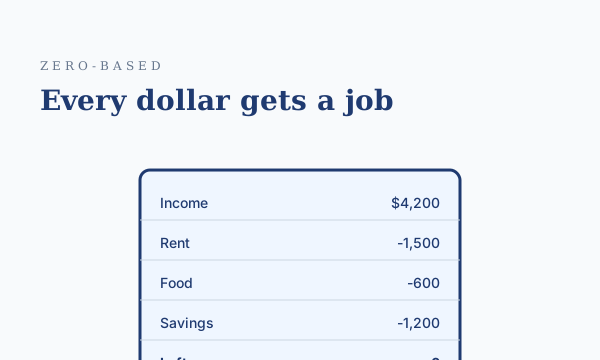
Zero-Based Budgeting: How It Works and Who It Is For
Every dollar gets a job before the month begins. Zero-based budgeting is the most precise method available — here is how to actually run one without burning out.
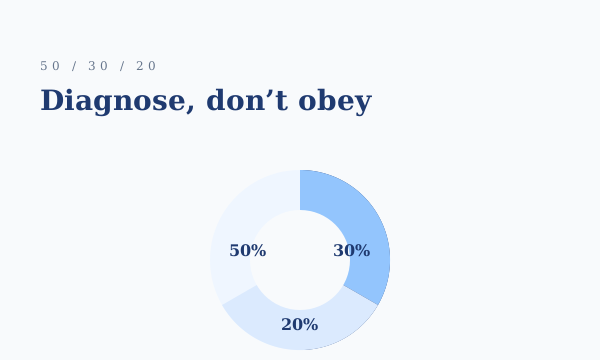
The 50/30/20 Budget Rule, Explained With a Real Example
A simple budgeting framework that splits take-home pay into needs, wants, and savings — with a worked example and adjustments for high cost of living.
How to Choose a Budgeting App (What Actually Matters)
Every budgeting app promises to change your life. The one that actually will is the one you will still be opening in six months. Here is how to evaluate them honestly.