Credit
Credit Card vs Debit Card: Which One Should You Actually Use?
For most day-to-day spending, a credit card offers stronger consumer protection and better rewards — but only if used with the discipline of a debit card.
Last updated September 3, 2026
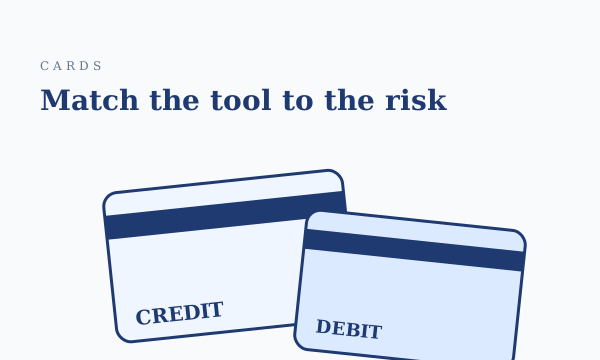
Credit and debit cards look nearly identical at the checkout, but the legal and financial machinery behind them is very different. Understanding the differences helps you use each one where it is strongest — and avoid the specific ways each can hurt you.
Consumer protection
This is the most important practical difference. Under the Fair Credit Billing Act, credit card users can dispute unauthorised charges and merchant errors with the card issuer, and the maximum liability for unauthorised charges is capped at $50 (and is almost always $0 in practice, thanks to issuer policies). Disputed amounts do not have to be paid while the dispute is being investigated.
Debit-card fraud protection is weaker. Liability limits under the Electronic Fund Transfer Act depend on how quickly the fraud is reported: up to $50 if reported within two business days, up to $500 within 60 days, and unlimited afterward. And a fraudulent debit charge removes money directly from your account while the investigation runs, potentially cascading into overdrafts on other bills.
Impact on credit score
Credit-card activity is reported monthly to the credit bureaus, so responsible use builds credit history and score over time. Debit-card activity is not reported at all — using a debit card for years does nothing to establish credit. For anyone who wants access to good rates on future loans, using a credit card responsibly is the more useful daily habit.
Rewards
Many credit cards offer cash back, travel points, or other rewards on purchases. Debit cards rarely offer meaningful rewards. But credit-card rewards are only a net win if the balance is paid in full every month — a 2% cash-back card is worthless if the balance carries at 22% APR. The most common failure mode is using a rewards card as an excuse to overspend and then carry a balance, at which point interest costs exceed rewards many times over.
Fees and interest
Debit cards spend money you already have, so they cannot create interest charges. Credit cards can be interest-free too — if you pay the statement balance in full every month, most cards charge no interest at all. Cash advances, foreign transactions, and late payments trigger fees on both card types; check the specific fee schedule of any card you use.
Cash flow discipline
The behavioural difference matters. A debit card enforces a hard limit — you cannot spend money that is not there. A credit card lets you spend beyond current cash, which is powerful when used deliberately and dangerous when used unconsciously. Research on cashless payment methods consistently finds that people spend more with credit than with debit or cash for equivalent purchases.
When to use which
For daily spending, a rewards credit card paid off in full every month generally wins on protection, rewards, and credit building. For anyone at risk of carrying a balance, a debit card removes that temptation entirely. Use a credit card for online purchases and travel where fraud protection matters most; use a debit card only where fees or acceptance make credit impractical.
Choose by transaction risk and cash discipline
For deposits, travel, online orders, or merchants with uncertain delivery, compare the issuer’s written dispute and temporary-credit process. Debit usually pulls from transaction cash and can affect bills while a dispute is investigated; credit uses a credit line but creates a liability. Legal and network protections vary, so do not infer them from the card logo alone.
For cash withdrawals, small merchants, or anyone likely to carry a card balance, debit may be simpler and cheaper—provided overdraft and foreign-use terms are understood. Credit rewards are not a benefit when interest, annual fees, cash-advance charges, or overspending exceed their value. Neither card type replaces account alerts and prompt fraud reporting.
Build a two-card operating rule
One workable system uses credit only for planned purchases already backed by cash, with automatic full-statement payment, and debit or account transfer where credit adds fees or is unavailable. Another reader may choose debit-only to preserve a hard spending limit. Write the rule around actual behaviour instead of chasing a universal winner.
Before travel or large purchases, verify foreign-exchange markup, dynamic-currency-conversion treatment, cash-withdrawal fees, merchant deposit holds, offline acceptance, and replacement support. Keep a second payment method separately. Global readers should consult local regulator guidance because U.S. liability timelines and reporting effects do not automatically cross borders.
The fundamental legal and financial differences
Credit cards borrow money from the card issuer for each transaction. You are legally obligated to repay the borrowed amount, typically by the statement due date to avoid interest charges. Federal law (Fair Credit Billing Act) limits your liability for unauthorized charges to $50, and most issuers waive even that with zero-liability policies. Disputed charges can be withheld from payment while investigated.
Debit cards withdraw money directly from your checking account. There is no borrowing and no interest — but there is also no borrowed money buffer if disputes arise. Under federal law (Electronic Fund Transfer Act), liability for unauthorized debit card charges is limited to $50 if reported within 2 business days, up to $500 if reported within 60 days, and potentially unlimited beyond 60 days. Once money leaves your account through fraud or dispute, recovery requires the bank to credit you back — a process that can take days or weeks while you are out the funds.
This legal asymmetry is the single most important reason to use credit cards for most purchases when possible. If a merchant charges wrongly, your checking account is not affected while the dispute is resolved. If your card number is stolen, no legitimate money leaves your account — the fraudulent charges appear on the credit card statement, get disputed, and typically get reversed before any actual payment is due.
When credit cards clearly win
Online purchases: credit cards protect against merchant fraud, non-delivery, misrepresentation of goods. Fair Credit Billing Act rights allow you to dispute charges with the card issuer, who reverses charges from the merchant. Debit card disputes go through the bank’s fraud process, which may take longer and involve more documentation.
Hotel reservations, car rentals, and other authorization holds: these merchants place holds ranging $200-3,000+ on the card for potential incidentals. On a credit card, this reduces available credit temporarily. On a debit card, this actual money is removed from your checking account until the merchant releases the hold — which can take 3-14 days after checkout. Debit card holds can create overdraft situations even when the actual charge is small.
Building credit history: credit card accounts report to bureaus and contribute to credit score. Debit cards do not report to credit bureaus and do not build credit history. Someone who uses only debit cards for years may have no credit history when they need to qualify for a mortgage or car loan.
Rewards programs: credit cards offer 1-6% cashback, points, or miles on purchases. Debit card rewards are rare and typically minimal. Over years, this difference adds up to hundreds or thousands of dollars for people who pay credit cards in full monthly.
Purchase protection benefits: many credit cards offer extended warranties, price protection, return protection, cell phone insurance, rental car collision coverage, and travel insurance. These benefits are typically not available on debit cards. Read your credit card benefits guide — many people pay for insurance policies that duplicate coverage they already have through credit card benefits.
When debit cards clearly win
For people who carry credit card balances or have a history of overspending: debit cards prevent debt accumulation. Every purchase reduces available cash directly, providing immediate feedback that credit cards mask. If credit card debt is a real risk for you, the psychology of debit spending may be worth the loss of credit card benefits.
For low-income households or emergency situations: debit cards eliminate the risk of accumulating high-interest debt during difficult periods. Someone unemployed and using credit cards for essentials can create long-term debt that outlasts the temporary crisis by years.
For minors and teenagers learning money management: debit cards teach spending discipline with real consequences (declined transactions) rather than deferred consequences (credit card bills months later). Many parents provide debit cards through banking services designed for minors (Chase First Banking, Greenlight, GoHenry).
For international travel: some debit cards specifically waive foreign transaction fees and reimburse ATM fees globally (Charles Schwab Investor Checking is particularly popular for this). Combined with travel credit cards for purchases, this dual approach provides both cash access and purchase protection abroad.
The optimal setup for most households
For adults with good credit and no overspending problem: use credit cards for essentially all purchases, pay statement balance in full every month, keep one debit card for cash withdrawals and any transaction that specifically requires debit. This maximizes rewards, purchase protection, and credit history without any interest cost.
The "pay in full monthly" discipline is critical. Credit cards make sense only when they cost nothing. A card charged $500 monthly and paid $500 monthly costs zero interest and generates $10-30 in rewards. A card charged $500 monthly and paid $200 monthly rapidly accumulates interest that dwarfs any rewards. The math only works if you never carry a balance.
Automate full statement balance payment from checking account. This removes the risk of forgetting a payment (missed payments trigger late fees, penalty rates, and credit damage) and guarantees you capture rewards without ever paying interest. Set alerts to warn if the statement amount is unexpectedly high, indicating either extra spending or potential fraud.
What if credit card debt already exists?
If you currently carry credit card balances, the answer is different. Continuing to use credit cards while carrying balances is a debt trap — new purchases start accruing interest immediately (no grace period on new charges when balance exists), while your minimum payments barely cover interest on existing debt.
Recommended approach: freeze credit cards (literally or through app controls), switch to debit for daily spending while aggressively paying down credit card debt, and only return to credit card use after the balance is zero and you have demonstrated 3-6 months of paying-in-full behavior with debit spending patterns.
The transition back should be gradual. Start using credit for one specific category (groceries only) with automatic full payment. If that works for 2-3 months, add another category. Rebuild credit card habits carefully to avoid returning to debt patterns.
Special situations and edge cases
Gas stations often place large authorization holds ($100+) on debit cards for pump purchases. Some banks release these quickly; others hold funds for days. Using credit cards at gas pumps avoids these holds affecting your checking balance.
Restaurant tips can create similar hold issues. Your card is initially authorized for the pre-tip amount, then charged for the full amount after tipping. On debit cards, both the pre-tip hold and the final charge may temporarily reduce your available balance, potentially causing overdrafts on other transactions.
Recurring subscriptions typically work better on credit cards. Subscription overcharges, non-cancellation, or fraudulent renewals are easier to dispute with credit card issuers. Debit card subscription problems often require closing the bank account to stop unwanted charges.
Person-to-person transfers (Venmo, PayPal, Cash App) are typically funded through bank account, debit card, or credit card. Bank account and debit are usually free; credit card funding often incurs 3% fees. For sending money to trusted friends and family, bank account or debit funding is optimal.
Common credit vs debit mistakes
The most common mistake is treating credit cards as extra income. Every credit card purchase must be paid back in the same month with cash you already have. Using credit cards for purchases you cannot afford this month creates debt that accumulates interest until eliminated — often years later at multiples of the original cost.
The second common mistake is using debit cards online or for authorization-heavy transactions. Debit card fraud exposure is much larger than credit card fraud exposure, and disputes are more difficult. Reserve debit for cash withdrawals and situations where debit is specifically required.
The third mistake is opening multiple credit cards to maximize rewards without discipline systems. Each additional card creates additional risk of missed payments, additional targets for fraud, and additional cognitive load. Most households do fine with 2-3 credit cards total, using each for the categories where it earns highest rewards.
Sources and methodology
We use primary and authoritative sources for rules, definitions, and data. Sources and factual claims were last checked September 3, 2026.
- Credit card resources — Consumer Financial Protection Bureau (United States)
- How do debit cards work? — Consumer Financial Protection Bureau (United States)
- Bank accounts and services — Consumer Financial Protection Bureau (United States)
Frequently asked questions
- Do I really need a credit card?
- Not strictly, but going without one means missing out on stronger fraud protection, rewards, and — most importantly — the credit history that makes future loans (car, mortgage) cheaper. For most people the answer is yes, provided the card is paid off every month.
- Is it safer to use a credit card online?
- Generally yes. If a fraudulent charge appears, credit-card protections let you dispute it without money leaving your account. A debit-card equivalent removes real money from your bank first and returns it only after investigation.
- Are prepaid debit cards a good middle ground?
- They can be useful for budgeting or for people building financial habits, but they typically do not build credit and often carry monthly fees. Check terms before using.
Related articles
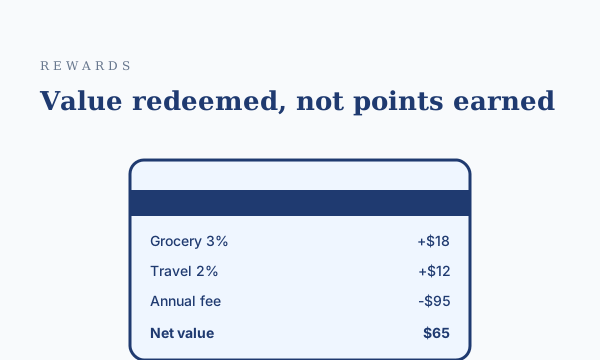
Credit Card Rewards Explained (Without the Hype)
Credit card rewards can be a genuine perk or an expensive distraction. The line between the two is drawn by whether you carry a balance.
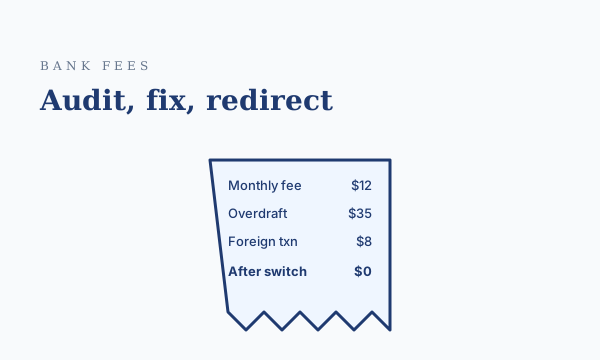
How to Never Pay a Bank Fee Again
The average American household still pays over $200 a year in avoidable bank fees. Getting that number to zero takes about an hour and stays free forever.

How to Build Credit From Scratch (No Cosigner Required)
Building a credit history from zero used to require a cosigner or an established relative. Today, three specific tools let almost anyone start in a single afternoon.